

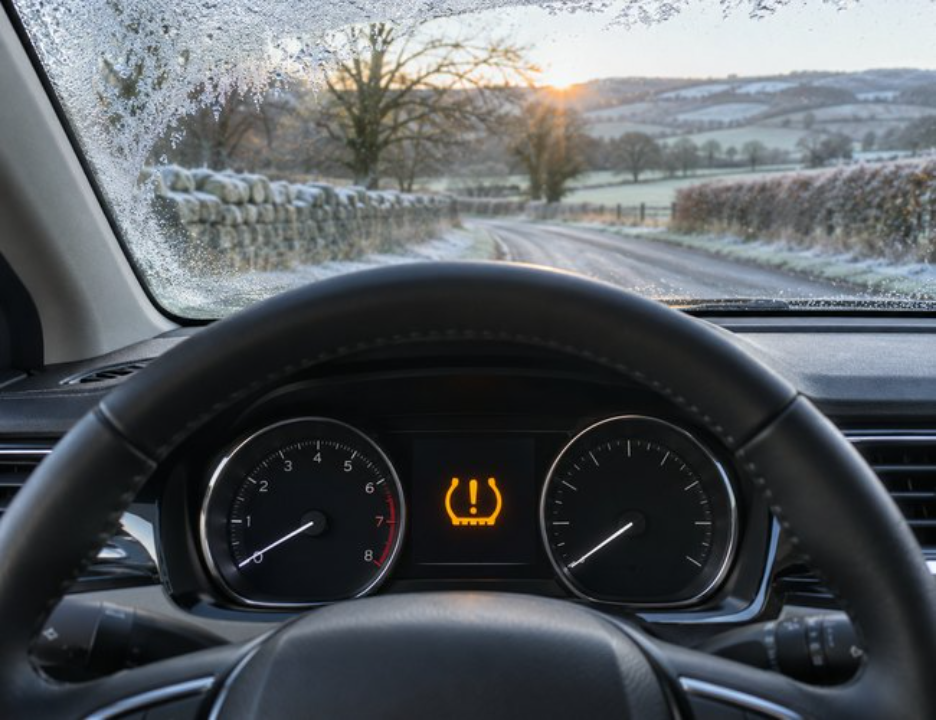
It’s that time of year. You get in the car on a cold Wirral morning, and there it is on the dashboard: an amber horseshoe with an exclamation mark in the middle.
That’s your TPMS light: your Tyre Pressure Monitoring System. Most drivers’ first thought is “how much is this going to cost me?” Often the honest answer is nothing at all. Here’s how to tell.
First, what is TPMS?
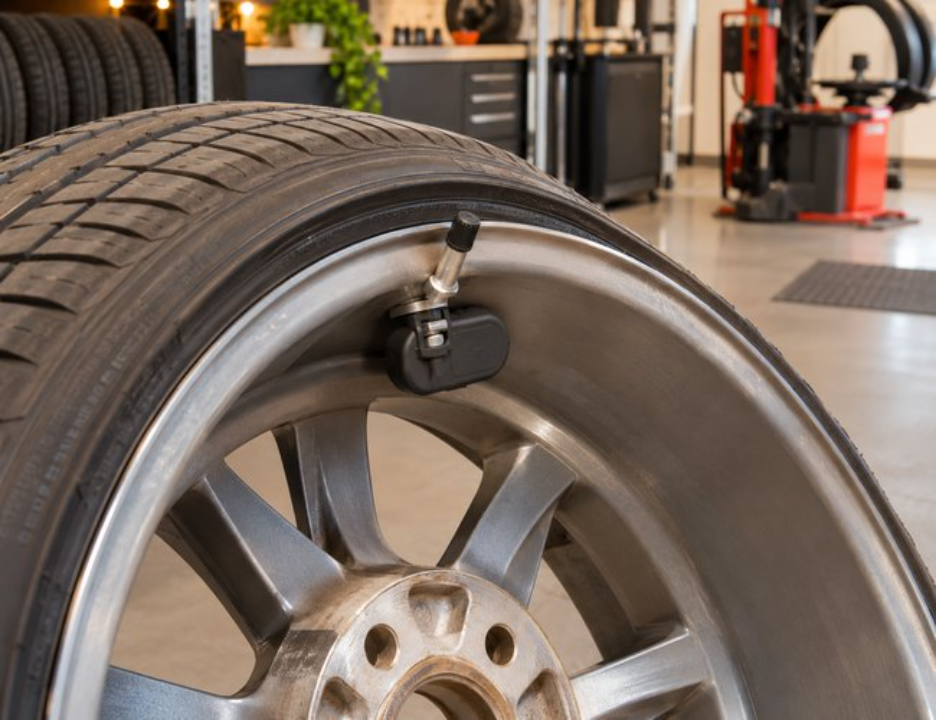
TPMS watches the air pressure in your tyres and warns you when one drops too low. Most cars do this with a small battery-powered sensor inside each wheel, fixed to the back of the valve. Some cars don’t have sensors at all and work it out from the ABS instead.
It’s there because low tyres are dangerous. They take longer to stop, grip less in the wet, wear out faster and use more fuel.
Steady or flashing? It matters
A steady light usually means one or more tyres is low on air. Something has let air out: a slow puncture, a leaking valve, or simply the cold.
A light that flashes for a minute or so when you start the car, then stays on, usually means the system itself has a fault. Most often a sensor’s battery has run flat, or a sensor has been damaged. Putting air in won’t clear this one.
Why is it on? The usual suspects
Cold weather. Tyres lose pressure as the temperature drops. A frosty night after a mild day is one of the most common reasons we see the light in winter.
A slow puncture. A nail or screw can leak for weeks before a tyre looks flat.
A leaking valve. Valves and seals wear out, and corroded valves let air seep out slowly.
A rim that needs cleaning. Dirt or corrosion where the tyre sits on the wheel can stop it sealing properly.
New tyres or swapped wheels. Some cards need to “relearn” their sensors after tyre work.
A dead or damaged sensor. The batteries are sealed inside and usually last around 5-10 years.
What to do when the light comes on
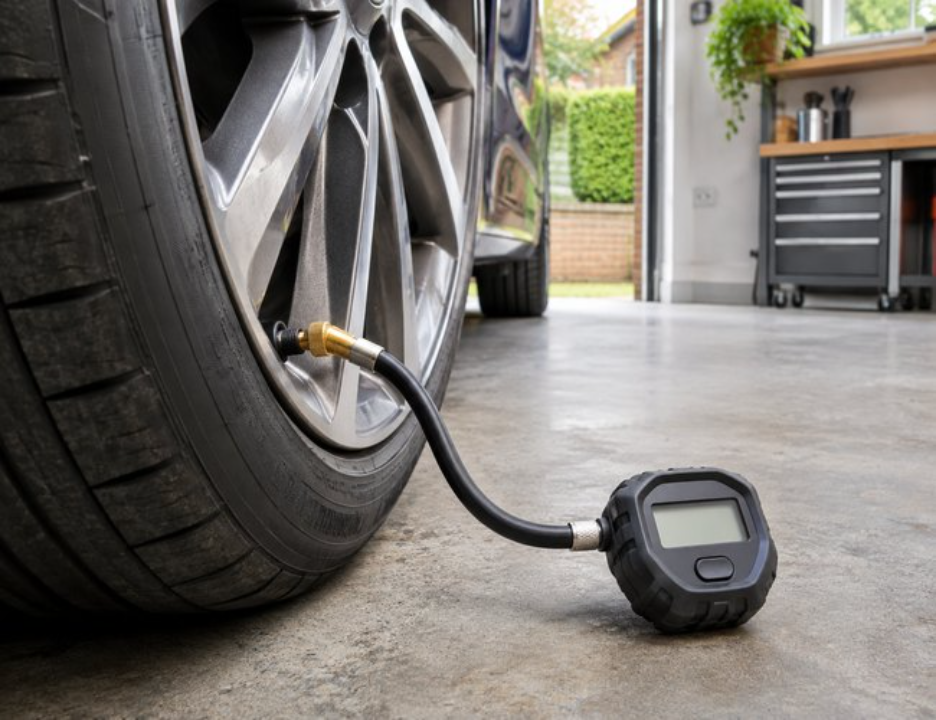
- Check all four tyres. Use a garage forecourt gauge or your own, ideally before you’ve driven far. The correct pressures are on a sticker inside the driver’s door frame, inside the fuel flap or in your handbook. The number on the tyre itself is the maximum, not what you should run at.
- Top up to the right pressure. On many cars the light goes off after a short drive. Some need a reset through the dashboard menu, so check your handbook.
- Look for anything obvious. A nail, a bulge or a tyre that keeps going down means it needs looking at.
- Still on, or flashing? Get it read. A TPMS tool reads each sensor’s pressure, battery and signal, so you know exactly what’s wrong instead of guessing.
Will it fail its MOT?
For most cars first used on or after 1 January 2012, the TPMS is checked during the MOT. If the system is malfunctioning or obviously not working, that can result in a failure.
A warning light caused by low tyre pressure does not automatically mean a fail, but you should still check the tyres and get the cause sorted as soon as possible.
Do you really need a new sensor?
Not always, and you shouldn’t be sold one without seeing why. A good tyre fitter will read the sensors first and show you the results. Often the fix is air, a puncture repair, a new valve, or a relearn.
If a sensor has failed, you can usually replace just that one. Many garages fit good-quality universal sensors that are programmed to your car, rather than dealer parts. Ask what’s included in the price: fitting, programming and the relearn should all be part of it.
How we can help
At Tyres 4 U Wirral on Kelvin Road, Wallasey, a TPMS diagnostic is free at the garage. We’ll read every sensor, show you what we’ve found and explain your options before any work. If you do need a sensor, it’s £90 including VAT, fitted, programmed and checked. If your sensors are fine and just need relearning, it’s £30 for the whole car.
We can also come to you on a mobile visit across Wirral (call-out charge applies).
See our TPMS service and prices · Call 0151 638 0906 · WhatsApp 07495 893 684
Open 7 days: Mon–Fri 8:30–5:30, Sat 9–4, Sun 10–3