

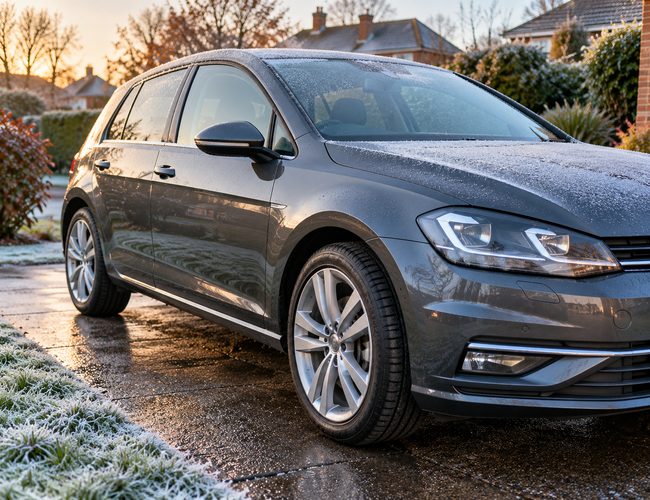
Practical checks for wet roads, frosty mornings and the journeys you need to make
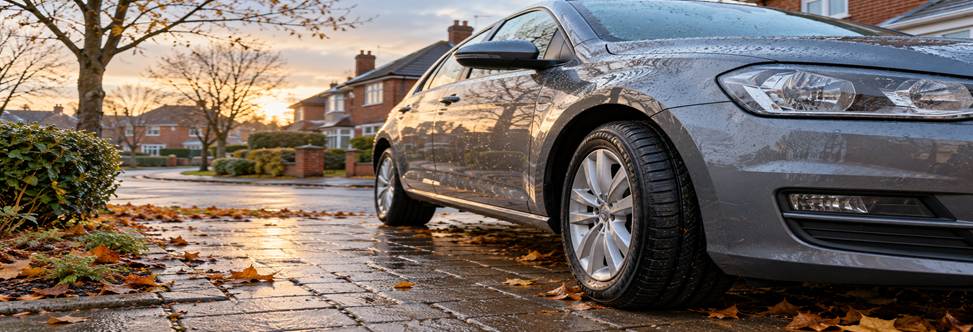
Winter preparation starts before the snow: tyre condition and pressure matter on wet autumn roads too.
Start before the first frosty school run
Winter preparation does not have to mean buying a new set of tyres. The best place to start is finding out whether the ones already on your car are in good condition, correctly inflated and suitable for the journeys ahead.
Whether you are commuting along the A41, joining the M53 or making short trips around Wallasey, rain, spray and darker mornings can make familiar journeys more demanding. A frosty start adds another reason to leave yourself time.
At Tyres 4 U Wirral, we can help you check the basics and understand your options. This guide explains what to look at now, when different tyre types are worth considering and what else to prepare before winter arrives.
You do not need snow for tyre checks to matter
Tread grooves help move water away from the area where a tyre meets the road. When the tread wears down, its ability to deal with standing water can reduce. Pressure and overall condition matter too.
A tyre can look acceptable from a few steps away while having a worn inner edge, a slow leak or damage on the sidewall. Checking now is more useful than waiting until a warning light appears or a wet journey feels uncomfortable.
Three things to check first
Start with tread, pressure and condition. Check all four tyres rather than judging the whole car from the easiest wheel to see.
If you carry a spare, check that it is serviceable and inflated to the correct pressure as well. If your car has a repair kit instead, make sure it is present, check any sealant expiry date and familiarise yourself with the instructions before you need it.
You do not have to identify every problem yourself. If something looks unusual, let a tyre professional take a closer look.
Give your current tyres a proper check

Check across the tyre and at several positions. One good-looking patch does not tell the whole story.
Look at tread across the tyre
For cars and light vans, the legal minimum is 1.6 mm across the central three-quarters of the breadth of the tread, around the entire circumference. A tyre must also be in a safe condition.
A tread-depth gauge gives a clearer measurement than a quick glance. Check at several places and look for differences between the inner, middle and outer areas. If you cannot safely see part of the tyre, ask us to check it.
The legal minimum is a limit, not a target to aim for through winter. If tread is getting low, discuss the tyre’s condition and the driving ahead rather than automatically waiting until it reaches the minimum.
Check pressure when the tyres are cold
Use the vehicle manufacturer’s recommended pressures for your tyre size and load. These are usually on a sticker around a door opening or in the handbook. Front and rear settings may differ.
Cold weather can lower tyre pressure, so a change in the weather is a useful reminder to check. Do not lower pressures to try to gain grip in snow, or copy the maximum pressure on the tyre sidewall.
Make pressure checks a regular habit. The Highway Code advises checking weekly, before driving when the tyres are cold. Check before longer journeys and use the appropriate settings for passengers and luggage.
Look for damage and repeated air loss
Cuts, bulges, exposed cords, embedded objects and unusual wear all need attention. A bulge is not something to leave until the next service.
If you keep topping up the same tyre, have the leak investigated. It may be a repairable puncture or a valve or wheel-seal problem, but adding air repeatedly does not fix the cause.
Take TPMS warnings seriously. Correct the pressures and investigate the cause rather than simply resetting the warning. If a tyre is flat or seriously damaged, do not drive it to us; stop safely and arrange help.
Do you need different tyres for winter
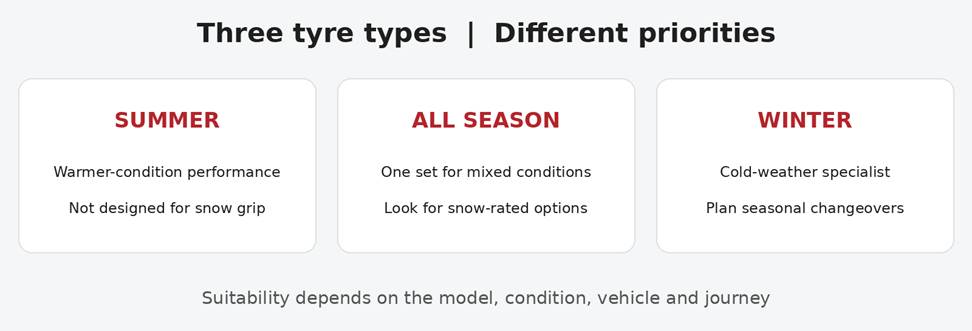
Choose for your routes and the conditions you expect, as well as the specific tyre’s performance.
Summer tyres
Summer tyres are designed mainly for warmer conditions and can perform well on wet as well as dry roads. Their name does not mean they only work when the sun is shining.
However, they are not designed to provide the snow traction of a suitable winter or snow-rated all-season tyre. If snow or ice is forecast, do not assume a healthy summer tyre makes the journey safe. Consider postponing a non-essential trip.
All season tyres
A suitable all-season tyre can be a practical option if you want one set throughout the year and need to cope with a mix of conditions, including occasional snow.
Look for the three-peak mountain snowflake marking when snow performance matters. It shows the tyre meets a defined snow-grip requirement. Many all-season models carry it; it is not exclusive to one brand. M+S alone is not equivalent to that tested snow rating.
All-season tyres involve trade-offs. Compare the particular model, including wet performance, rather than assuming every tyre in the category behaves the same.
Winter tyres
Winter tyres are designed for colder conditions, with tread patterns and rubber compounds intended to help in winter weather, particularly snow. They are worth discussing if you regularly travel on untreated routes, face more severe conditions or must make essential journeys in cold weather.
They usually involve a seasonal change and somewhere suitable to store the other set. If changing to winter tyres, fit a suitable set of four rather than fitting them only to the driven wheels.
What about the 7 degree rule
Around 7°C is commonly used as guidance for considering a seasonal change. It is not a switch that makes every summer tyre lose grip below that temperature, or makes every winter tyre better in every test.
The surface, weather, tyre model and condition all matter. Tell us where and when you drive so we can discuss an option that suits your actual use.
Match your driving to the conditions
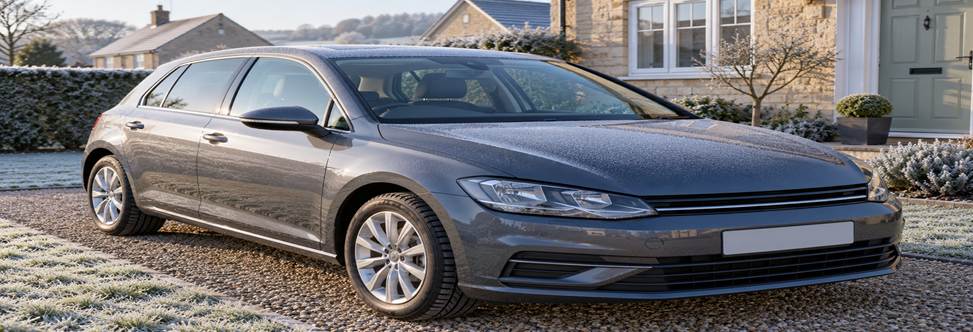
Even well-prepared tyres need cautious driving, clear visibility and room to stop.
Leave more space in the rain
Wet roads need a bigger safety margin. Stopping distances in wet weather can be at least double those on dry roads, so increase your following distance and slow down for the conditions.
Avoid sudden braking or steering. If standing water makes the steering feel unresponsive, ease off the accelerator and slow gradually. Do not rely on a deeper tread pattern to make driving through pooled water safe.
Treat frost and ice as a different challenge
Check the forecast and allow extra time. In icy or snowy weather, avoid non-essential journeys. Conditions can change over short distances, and a treated main road does not mean every side road is clear.
If travel is essential, use gentle acceleration, braking and steering, and leave much more space. Stopping distances on ice or snow can be ten times greater than on dry roads.
Winter tyres, all-season tyres and four-wheel drive do not remove the risk. Being able to pull away is not proof that you can stop safely.
Investigate changes after a pothole impact
If the car starts pulling, the steering wheel sits off centre or you notice a vibration after an impact, have it checked. Potholes can affect tyres, wheels and alignment.
Alignment and balancing do different jobs. We can assess the wheels and tyres and explain which checks are appropriate, rather than assuming one service will fix every symptom.
Check the rest of the car too
Make sure lights, wipers, washers and demisters work properly. Use screenwash suitable for the expected temperatures and have battery or starting concerns assessed by an appropriate garage.
Clear all windows and mirrors before setting off, not just a small patch of windscreen. Keep an ice scraper, de-icer, warm clothing, a torch and a charged phone available. For a longer winter trip, take water, snacks and any essential medication.
These simple preparations matter alongside tyre care. Good tyres cannot compensate for poor visibility or a rushed journey.
Your winter tyre checklist
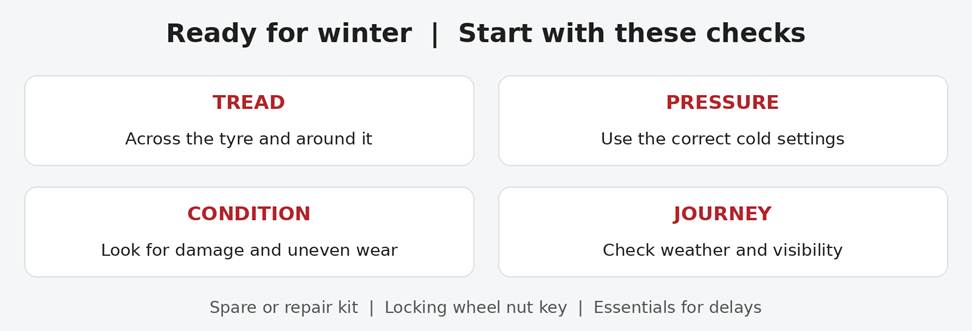
Start with what you have. A check can tell you whether anything needs attention.
Before winter settles in
Check tread across all four tyres and at several places around each one. Look for damage and uneven wear, including the less-visible inner edges.
Set cold pressures to the vehicle’s guidance for your tyre size and load. Investigate any tyre that repeatedly loses air.
Check your spare or repair kit, and make sure you know where the locking wheel nut key is kept if your car needs one.
Think about your routes: mainly local roads, early starts, rural lanes or regular travel to colder areas. If your current tyre type no longer suits your needs, discuss the alternatives before a cold snap arrives.
Before a longer winter journey
Look at the weather forecast and travel conditions. Allow time to clear the car properly and choose whether the journey should go ahead.
Check pressures for the load, make sure the tyres have no new damage and deal with warning lights before departure. Check lights, screenwash and visibility, then pack the items you may need if delayed.
If you drive an EV or hybrid, the same tyre checks still apply. Plan charging or fuel stops with weather and possible delays in mind, rather than leaving yourself a very small margin.
Not sure what your tyres need
You do not need to buy winter tyres simply because the calendar has changed. You do need tyres that are safe, serviceable and suitable for how you use the car.
At Tyres 4 U Wirral, we offer free tyre safety checks and pressure checks and adjustments. We can discuss tread, visible condition, uneven wear and suitable replacement options if needed.
Call 0151 638 0906 or visit our garage on Kelvin Road, Wallasey, CH44 7JW. For mobile tyre, puncture or TPMS enquiries, call or message 07495 893684 so we can check your location and availability and confirm any call-out charge.
A little preparation now can make the next wet commute or frosty morning one less thing to worry about.